The WyLab is broadly interested in the moral mind—studying everything from how morality influences and guides reasoning and information-seeking, to its role in judgment and decision-making. We draw inspiration from what James called the “rich thicket of reality”, looking to answer questions that intersect with real life, like why are people so curious to learn about bad guys on TV? We apply theory and methods from many fields, including social psychology, cognitive science, affective science, neuroscience, and philosophy.
ALL | Curiosity in Moral Domain | Pursuits for Truest Self | Is Morality Gendered | Rules + Who Can Break Them | Emotion / Cog. / Perception
In Prep
Austin, C., Bostyn, D., & Wylie, J. (In preparation). Examining how moral imagination affects the ability to represent prosocial behaviors.
Austin, C. & Wylie, J. (In preparation). People discount their moral judgments for acts that occur in the past.
Xiong, T., Tang, X., & Wylie, J. (In preparation). Emotional Burden Increases Moral Evidence Credibility and Usability.
Under Review
Dhaliwal, N. A., Skarlicki, D. P., Wylie, J., Hoegg, J., & Young, L. L. (Revise & Resubmit). Costly corporate moral signaling and appraisals by prospective employees.
Loustau, T., Fabrizio, A., Young, L., Wylie, J., Syropoulos, S. (Revise & Resubmit). Partisans Underestimate and are Influenced by In-and-Out-Party Dynamic Norms.
Storbeck, J., Wylie, J., & Chapman, H. (Revise & Resubmit). Fear advantages the holding of low spatial frequency visual information in working memory: Implications for fear biasing goal-driven action in a top-down manner.
In Press
Austin, C. & Wylie, J. (In press). Moral Motivations. In Edward Hirt (Ed.), Handbook of Motivation and Social Psychology.
2026
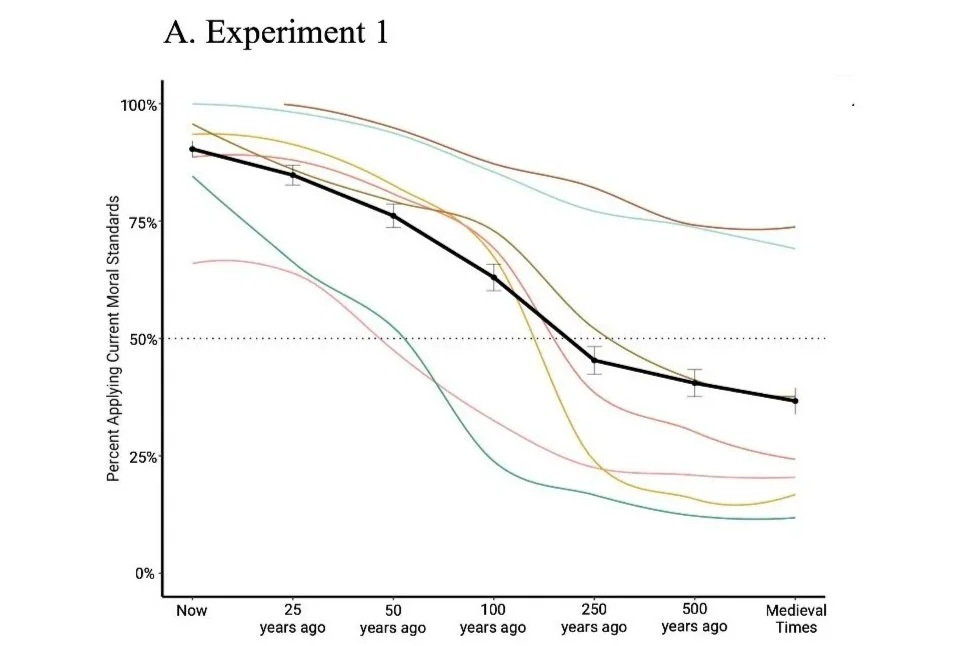
Austin, C. & Wylie, J. (2026). The Temporal Discounting of Moral Judgments. Submitted to Proceedings of the 48th Annual Meeting of the Cognitive Science Society. Cognitive Science Society.
Xiong, T., Tang, X., & Wylie, J. (2026). Emotional Burden Increases Moral Evidence Credibility and Usability. Submitted to Proceedings of the 48th Annual Meeting of the Cognitive Science Society. Cognitive Science Society.
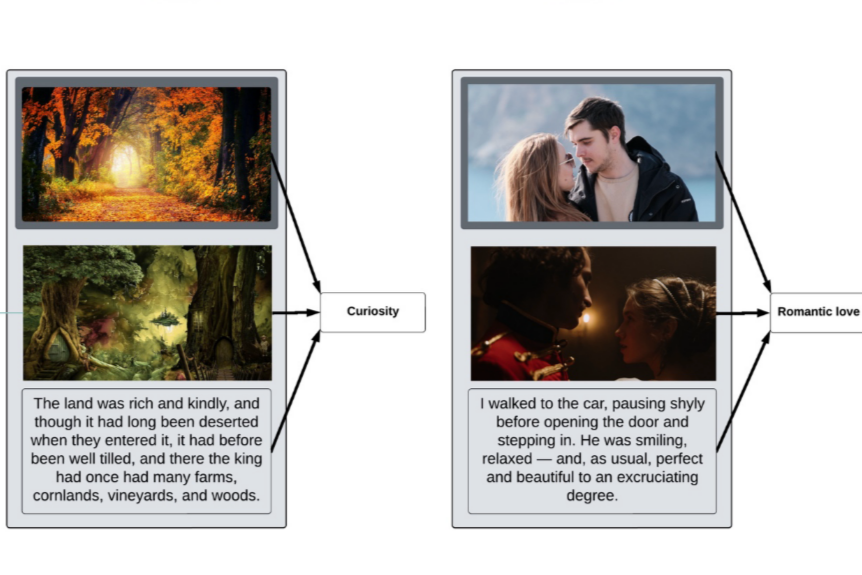
Dubourg, E., Thouzeau, V., ..., Wylie, J., Zhong Y., & Baumard, N. (2026). Carving Stories at their Natural Joints. Psychological Review.
2025
Law, K. F., Wylie, J., Kraft-Todd, G., Liang, N., Young, L., & Syropoulos, S. (2025). People are more skeptical of others’ public virtue motivations than their own in separate (but not joint) evaluations. British Journal of Social Psychology, 64(4), e70014.
Wylie, J., Chiu, P.Y., Dakin, N., Cunningham, W., & Gantman, A. (2025). The psychology of state punishment. European Journal of Social Psychology.
Flores-Robles, G., Alto, A., Anderson, K., Wylie, J., Satter, L., & Gantman, A. (2025). Understanding Committed Leftists in the United States right before the 2020 U.S. Presidential Election. Journal of Social and Political Psychology.
2024

Wylie, J. & Gantman, A (2024). Cooperation, Domination: Twin Functions of Third-Party Punishment. Social and Personality Psychology Compass.
Unger, K., Wylie, J., & Karbach, J. (2024). Induced positive affect improves cognitive flexibility in younger and older adults. Aging, Neuropsychology, & Cognition.1-24.
Storbeck, J., Stewart, J.L., & Wylie, J. (2024). Sadness and Fear Enhance Facets of Inhibition: Support for the Emotion and Goal Compatibility Theory. Cognition and Emotion.
2023
McHugh, C. & Wylie, J. (2023). Moral Judgment. In Chris Comerford (Ed.), Encyclopedia of Heroism Studies.
2022
Wylie, J., Sharma, N., & Gantman, A. (2022). “Anything that looks like smoking is bad”: Moral opposition and support for harm reduction policies. Journal of Experimental Social Psychology, 101, 104343.
Wylie, J., Tracy, R., Young, S. (2022). The effects of spatial frequency on the decoding of emotional facial expressions. Emotion.
Wylie, J., Alto, A., & Gantman, A. (2022). Imagining our moral values in the present and future. [Peer commentary on "Why Imaginary Worlds? The psychological foundations and cultural evolution of fictions with imaginary worlds" by Dubourg, E., & Baumard, N.]. Behavioral and Brain Sciences, 1-52.
2021
Tierney, W., Hardy, J. H., III., Ebersole, C., Viganola, D., Clemente, ..., Wylie, J., Storbeck J., Andreychik, M.R., McPhetres, J., Vaughn, L.A., & Uhlmann, E. L. (2021). A creative destruction approach to replication: Implicit work and sex morality across cultures. Journal of Experimental Social Psychology, 93, 104060.
2020
Tracy, R., Wylie, J., Young, S. (2020). The moderating effects of intergroup processes on the identification and expression of emotion. In A. Freitas-Magalhães & J. Borod (Eds.), The Handbook on Facial Expression of Emotion.
2019
Storbeck, J., Dayboch, J., & Wylie, J. (2019). Fear and happiness, but not sadness, motivate attentional flexibility: A case for emotion influencing the ability to split foci of attention. Emotion.
2018
Wylie, J. (2018). Perceiving the world around us: How divergent methods illustrate convergent perspectives. In M. J. Crump (Ed.), From theory and data to application. (Ch. 6).
Storbeck, J. & Wylie, J. (2018). The functional and dysfunctional aspects of happiness: Cognitive, physiological, behavioral, and health considerations. In H. Lench (Ed.), The function of emotions (ch.10, pp 195-220). New York, NY: Springer.